copilot.website: semantic domain search, ten years later
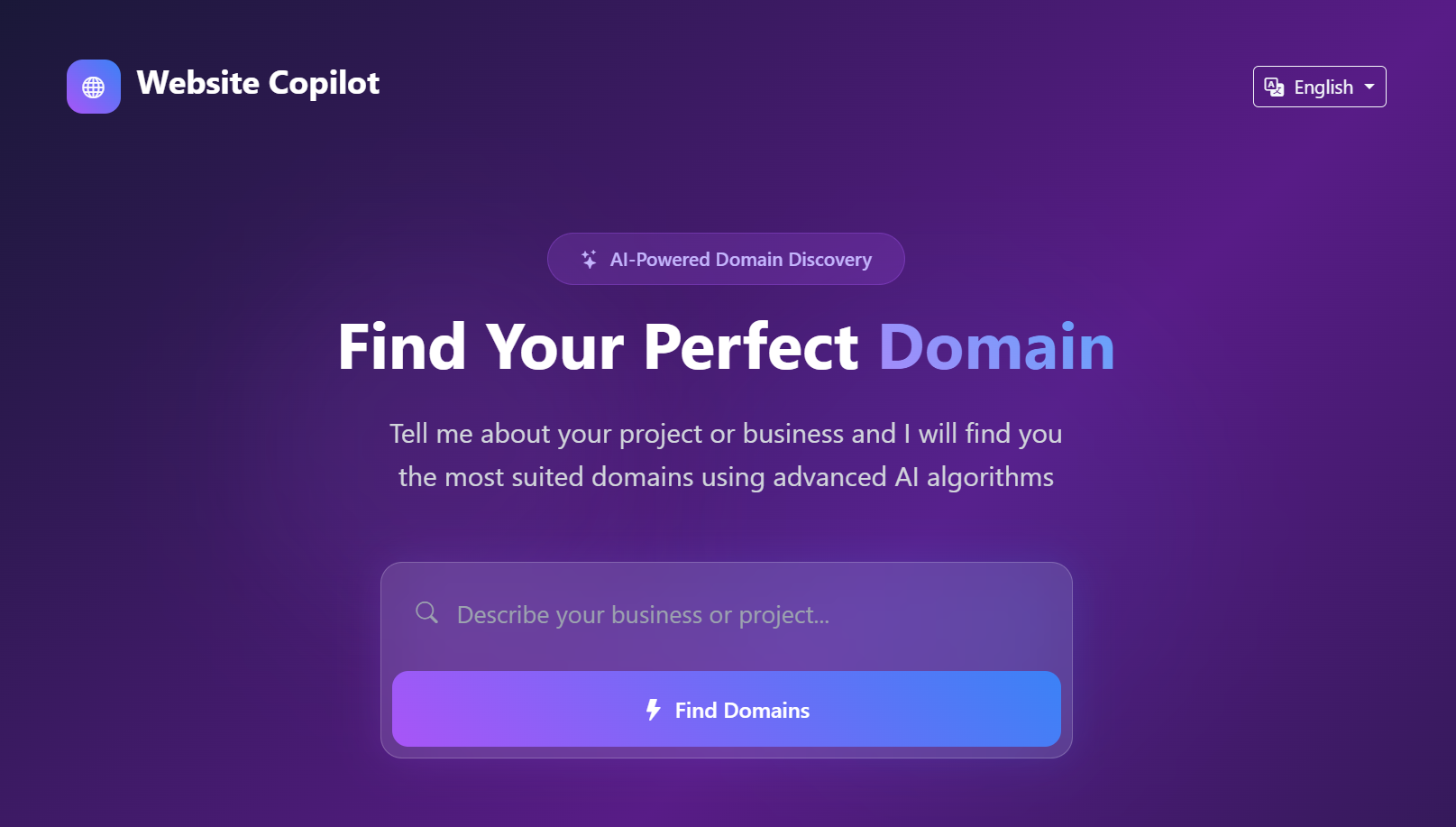
In 2015 I worked on a project called alternom.com.
The idea was simple to explain and surprisingly hard to build: help people find better domain names by meaning, not just by typing a keyword and checking whether the .com was available.
Most domain recommendation tools, then and now, behave mainly as keyword variation machines. They look for alternatives to the words you typed and keep you inside the same familiar extensions: .com, .net, .org, maybe a few country-code domains.
But they rarely ask a more interesting question:
Is there a domain extension that would express this project better?
For example, a law firm using a long domain such as perezyasociadosabogados.com might not need another awkward .com variation. It might be better served by a clearer semantic domain such as perezyasociados.abogado or perezyasociados.law.
That was the original intuition behind alternom.com: domain search should not only search for available names. It should help match meaning, category and intent.
At the time, I tried to solve the semantic part manually. I built logic by hand, including a fairly complex affinity table between words in different languages. The goal was to connect business ideas, concepts, categories and possible domain extensions in a way that felt useful.
It worked as an exploration, but it also made the limitation obvious: semantic affinity is hard to model manually. You can encode some relationships, but the system becomes difficult to maintain, difficult to expand, and always a little too rigid.
Ten years later, in summer 2025, I revisited the same idea almost by accident.
I found copilot.website for sale on Sedo at a reasonable price and thought it could be a good domain for bringing the idea back. The name fitted the product well: a copilot for finding better website domains.
That became the starting point for a new version of the old idea.
The product is a semantic domain recommendation tool for projects, brands and businesses. The user describes what they want to build, and the system suggests domain options that fit the intent of the project.
Not just “add .com to this name”.
The interesting part is matching the meaning of the project with domain extensions that may carry conceptual value: .travel, .green, .shop, .studio, .abogado, .law, and many others.
What had required a manually curated affinity model in 2015 became a semantic retrieval problem in 2025.
How it works
At a high level, copilot.website is a small semantic intelligence chain:
project description
→ brand/domain extraction
→ optional website scraping
→ semantic embedding
→ vector search for relevant TLDs
→ brand + extension combinations
→ availability checks
→ commercial presentation